

How to Prepare a Fireplace for Winter: A Homeowner's Guide
Last Updated: November 22, 2026
Quick Summary
To prepare a fireplace for winter, start with a professional chimney inspection, since the Chimney Safety Institute of America recommends an annual inspection for every fireplace and chimney even if you rarely burn. Then clean the firebox, check the damper and flue, and inspect the exterior masonry and cap.
Wait at least 24 hours after your last fire before sweeping ash into a metal bucket.
Never light a fire with a closed damper.
Turn off the gas supply and pilot before cleaning a gas fireplace.
Keep alarms at least 10 feet from the fireplace to reduce false alarms.
Burn only seasoned firewood below about 20 percent moisture content.
Is your chimney ready for the cold?
Ryan & Son Chimneys inspects, cleans, and repairs fireplaces so you can burn safely all winter.
Table of Contents
Start With a Chimney Inspection Before Winter
Cold weather is coming, and your fireplace has been sitting idle for months. Before you light the first fire, you need to know the chimney is safe.
Birds can nest in flues, creosote can build up, and mortar can crack. A quick look from the ground won't catch any of it.
A yearly inspection catches these issues before they become a fire hazard or a carbon monoxide risk (Preventing Chimney Fires). The Chimney Safety Institute of America recommends an annual inspection for every fireplace and chimney, even if you rarely burn.
What a Professional Inspection Covers
A professional inspection checks far more than the firebox. Here is what a certified sweep looks at:
The flue liner for cracks, gaps, and creosote buildup
The damper for smooth operation and a tight seal
The firebox for damaged brick and loose mortar
The chimney cap and crown for rust and cracks
Exterior masonry for voids and water damage
Our team uses LEVEL 2 interior camera scans to see inside the flue. A camera finds hidden cracks and blockages that a flashlight cannot reach. If you want to book the inspection that should come first, you can schedule a Level 2 chimney inspection before the cold sets in.
Clean the Fireplace and Remove Ash, Soot, and Debris
A dirty firebox burns poorly and releases more smoke into your home. Clear out old ash, soot, and debris before the heating season starts.

Start with the firebox. Sweep leftover ash into a metal bucket, never a plastic one. Wait at least 24 hours after your last fire so no embers remain.
Next, check the flue for soot. Heavy, crusty creosote needs a professional sweep. Do not try to scrape it yourself. If the soot is thick, book a professional chimney sweep to handle the cleaning safely.
Cleaning by Fireplace Type
Not every fireplace cleans the same way. Here is how to handle each type:
Wood fireplace: Remove ash and soot. Have the flue swept yearly.
Gas fireplace: Wipe the glass and logs. Skip the ash, since there is none.
Pellet stove: Empty the ash pan and clean the vent pipe.
Gas logs: Dust the logs gently. Check the burner ports for clogs.
A common mistake is using a household vacuum on fine ash. It clogs the filter fast and can spread dust. Use a shop vac rated for ash instead.
Each fireplace type needs a slightly different cleaning routine before the heating season.
Fireplace type | What to clean |
Wood fireplace | Remove ash and soot; have the flue swept yearly |
Gas fireplace | Wipe the glass and logs; skip the ash |
Pellet stove | Empty the ash pan and clean the vent pipe |
Gas logs | Dust the logs gently; check burner ports for clogs |
How to Check a Fireplace Damper and Flue
The damper is a metal door above the firebox that controls airflow. A stuck or rusted damper traps smoke indoors or lets heat escape up the chimney.
Open and close the damper by hand. It should move smoothly and seal tight when closed.
Shine a flashlight up the flue. You should see a clear, open passage. If the damper is damaged, you may need damper parts or a replacement before you burn.
Watch out: never light a fire with a closed damper.
How to Prepare a Gas Fireplace for Winter
Gas fireplaces need less cleanup than wood, but they still need a check before winter. The stakes are higher because gas leaks, blocked vents, and faulty components can be dangerous. Treat this as a safety inspection, not a dusting.
Turn off the gas supply and the pilot before you touch anything. Then follow these steps:
Remove the glass front and wipe it with a fireplace glass cleaner. Check the gasket around the glass for cracks or stiffness.
Dust the logs and burner with a soft brush. Do not scrub ceramic logs; they chip easily.
Check the burner ports for clogs or soot. A clogged port causes uneven flames and incomplete combustion.
Look at the pilot light and thermocouple for damage. A weak or yellow pilot flame is a warning sign.
Test the carbon monoxide detector nearby before you relight.
Vented vs. Vent-Free: Know Which You Have
Preparation differs by system, and mixing the advice is where homeowners get into trouble.
Direct-vent and B-vent gas fireplaces pull combustion air from outside and exhaust through a sealed flue. Check the exterior termination for bird nests, leaves, or snow blockage. A blocked vent can push carbon monoxide back into the room.
Vent-free (unvented) gas logs release combustion byproducts into the room. They require a working carbon monoxide alarm in the same room and should never be used with the fireplace glass closed unless the manufacturer specifies it. Follow the owner's manual for clearances and run times.
Gas log sets in a wood firebox still need an open damper during operation. Confirm the damper is fully open before lighting, and check that the flue is clear.
Warning Signs That Mean Stop
Stop using the fireplace and call a qualified technician if you notice:
A gas smell at any point. Leave the house and call your gas provider from outside. Do not try to fix a gas connection yourself.
Flames that are mostly yellow or orange instead of blue, which can indicate incomplete combustion.
Soot on the logs, glass, or surrounding walls.
A pilot that will not stay lit or keeps going out.
Headaches, dizziness, or nausea when the fireplace is running.
A certified technician should check gas components, connections, and venting each year. Annual service can catch small issues, like a loose connection or a spider web in a burner tube, before they become a safety problem.
Inspect the Chimney Exterior, Masonry, and Chimney Cap
Water is the number one enemy of a chimney. A cracked crown or missing cap lets rain in, and freeze-thaw cycles split the masonry apart.
Walk outside and look up at the chimney. Check for:
Cracks in the chimney crown
Loose or missing bricks
Crumbling mortar joints
A rusted or missing chimney cap
White staining, a sign of water damage
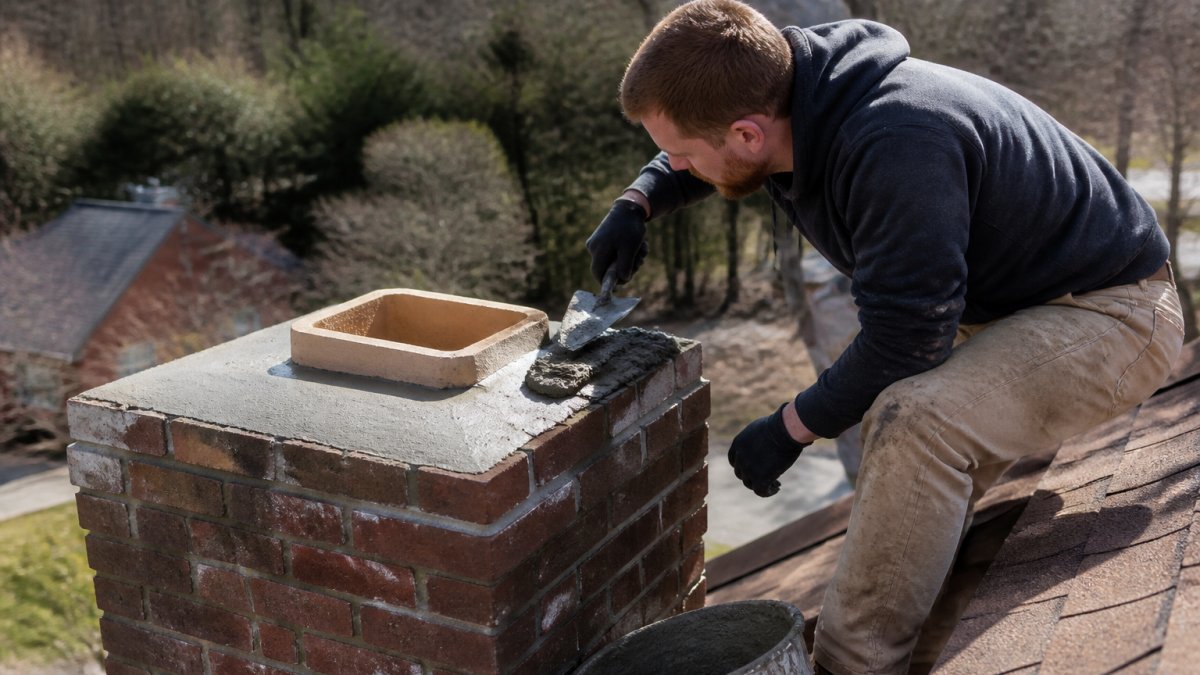
Small mortar cracks can be repaired with tuck-pointing. Larger voids and damaged brick need a mason. A proper chimney cap keeps rain, birds, and debris out of the flue. If you find masonry or cap problems, our team can handle exterior chimney repairs before winter makes them worse.
How to Insulate a Fireplace When Not in Use
An unused fireplace is a hole in your wall. Warm air escapes up the flue, and cold air sneaks in. Sealing it when idle keeps your home warmer and cuts heat loss.
Here are a few ways to insulate a fireplace when not in use:
Close the damper tightly. This is the simplest first step.
Add a chimney balloon. Inflate it inside the flue to block drafts.
Use a fireplace plug. A foam board cut to fit the opening works well.
Seal gaps around the hearth with caulk or insulation.
Remove any blockages before you use the fireplace again. A forgotten balloon or foam plug is a fire risk. Mark your calendar to pull it out before the first fire of the season.
Safety Checks, Warning Signs, and Firewood Storage
Some problems mean you should stop using the fireplace right away. Know the warning signs before you burn, and set up your alarms and firewood so the season starts safe.
Stop and Call a Professional If You Notice
Smoke backing into the room
A strong, smoky smell that lingers after the fire is out
Soot stains on the wall above the firebox
A damaged or missing flue liner
Headaches, dizziness, or nausea when the fire is lit
Those last two can point to carbon monoxide. Do not relight until a qualified professional has inspected the chimney and flue.
Alarm Readiness
Smoke and carbon monoxide alarms are your first line of defense. Before the first fire:
Test every smoke and carbon monoxide alarm in the home.
Replace the batteries, even if the alarm has not chirped.
Confirm there is a carbon monoxide alarm on each level of the home and near sleeping areas.
Keep alarms at least 10 feet from the fireplace to reduce false alarms from normal smoke.
The U.S. Fire Administration reports that heating fires are a leading cause of home fires in cold months, and working alarms are the simplest way to catch a problem early.
Firewood Moisture and Storage
Burn only seasoned firewood. Wet wood smokes, burns cool, and builds creosote fast. Here is how to tell the difference:
Seasoned wood is lighter, has cracked ends, and makes a hollow sound when two pieces are knocked together. It has dried for at least six months, often longer.
Green or wet wood is heavy, has a solid end grain, and hisses or steams when burned.
A moisture meter takes the guesswork out. Wood below about 20 percent moisture content is generally considered ready to burn. Store firewood outside, off the ground, and away from the house, and keep a covered stack for the wood you bring in.
Watch out: never store firewood against the house or inside the firebox between fires. It invites pests and can smolder if embers remain.
Book Your Pre-Winter Chimney Inspection
You now have a clear plan to prepare a fireplace for winter. Inspect the chimney, clean the firebox, check the damper and flue, and look over the exterior.
A safe fireplace starts with a real inspection. Ryan & Son Chimneys uses LEVEL 2 interior camera scans to identify chimney issues.
Do not wait for the first cold night to find out something is wrong. Reach out through our contact page to book your visit.
Cold nights are coming, and a fireplace that sat unused all year can hide real dangers.
Frequently Asked Questions
How do I know if my fireplace needs a chimney inspection before winter?
Schedule a chimney inspection before winter if you have not had one in the past year, if you notice creosote buildup, water stains, crumbling mortar, or a smoky smell, or if the fireplace has gone unused for several seasons. The Chimney Safety Institute of America recommends annual inspections for wood-burning fireplaces. A Level 2 inspection with an interior camera scan catches hidden liner cracks and blockages that a visual check from the hearth cannot reveal.
How do I check whether my fireplace damper is working?
Open the damper fully and look up the flue with a flashlight to confirm the plate moves freely and seats correctly when closed. Test the draft by lighting a small piece of paper near the opening; smoke should rise steadily up the chimney. If the damper sticks, will not close flush, or smoke rolls into the room, stop using the fireplace and have it serviced before the heating season.
How can I insulate my fireplace when it is not in use?
A fireplace opening that stays unused all winter pulls heated air up the flue and lets cold air in. Seal the opening with a fireplace plug or a sheet of rigid foam board cut to fit, and close the damper tightly. For a permanent fix, ask a chimney professional about a top-sealing damper, which caps the flue from above and stops heat loss without blocking future use.
Should I clean my fireplace before winter even if I only burn a few fires a year?
Yes. Even occasional burning leaves soot and creosote on the firebox walls and flue, and those deposits are flammable. Ash and debris also attract moisture and pests during the off-season. A cleaning before the heating season lets a professional check for cracks, obstructions, and damaged seals at the same time, so small issues are caught before they become costly repairs.
Comments